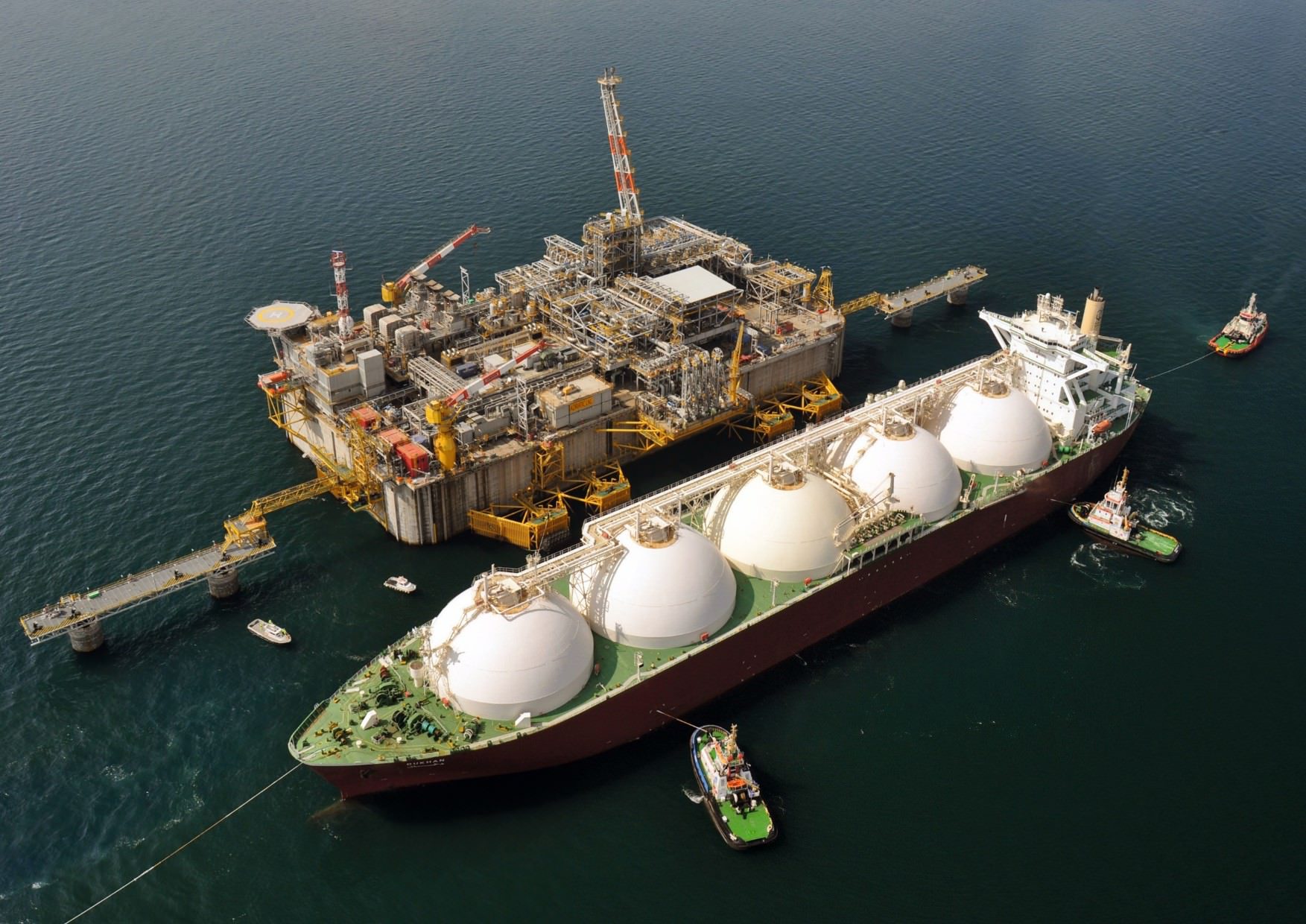
Qatari LNG Is Moving Through Hormuz Again: the Risk Premium Isn’t Gone
Published on October 5, 2026
More Qatari LNG cargoes are moving through the Strait of Hormuz, offering the clearest sign yet that physical gas flows are adapting to the security risks that have disrupted one of the world’s most important energy corridors.
Several LNG carriers loaded at Qatar’s Ras Laffan terminal have recently reappeared outside the strait after making the transit, according to vessel-tracking data cited by Reuters. The increase extends a recovery that was already visible in September, when Kpler counted 21 LNG cargoes exiting Hormuz, the highest monthly total since the war began.
But traders should be careful about calling this a normalization of the LNG market.
The cargoes are moving. The risk has not disappeared.
Before the conflict, roughly one-fifth of global crude oil and LNG supply passed through Hormuz. LNG traffic remains far below those normal levels, while vessels continue to face security threats in and around the waterway. Reuters reported that attacks on commercial shipping have continued even as more energy cargoes resume transit.
That creates an unusual physical market. The question is no longer simply whether Qatar can produce LNG. Qatar can. The question is whether shipowners, charterers, insurers and buyers are willing to accept the operational and financial risk of moving those cargoes through a contested chokepoint.
For commodity traders, that distinction is critical. A cargo that physically exists but cannot move reliably is not equivalent to freely available supply. Freight, insurance, vessel availability, routing decisions and delivery timing all become part of the commodity price.
That is why the recent increase in transits should be viewed as a logistics recovery, not yet a full supply recovery.
Physical optionality is becoming the competitive edge
The LNG market is increasingly rewarding the same capabilities that have become valuable across the broader commodity complex: access to physical supply, shipping relationships, storage, destination flexibility and the ability to manage geopolitical risk.
That is directly relevant to the firms tracked by the GCT Index.
Shell Trading on the GCTI, for example, sits at the top of the Index, with the strongest overall score and leading marks across logistics, ESG, compliance and geopolitical resilience. The broader lesson is more important than any single company.
When a chokepoint becomes unreliable, traders with diversified physical networks can redirect cargoes, secure alternative vessels, manage destination exposure and capture dislocations between regional markets. Those capabilities become economically valuable long before a disruption shows up in quarterly earnings.
The LNG market is still pricing uncertainty
For now, the return of Qatari cargoes is a constructive signal. More vessels getting through Hormuz means more physical supply can reach Asian buyers and reduces some of the extreme scarcity created by the disruption.
But the market has not returned to normal. The continued use of dark tracking by some vessels makes flow estimates less certain, while attacks around the waterway mean the next escalation could quickly reverse the improvement. Oil markets are already showing the same dynamic: Middle East crude flows have recovered substantially, yet freight, insurance and logistical constraints continue to keep delivered energy costs elevated.
For LNG traders, the key indicator is therefore not simply how much Qatar is producing. It is how many cargoes can move, how reliably they can move, and what it costs to get them to the buyer.